
Researchers and laboratories that rely on analytical data must be confident in the accuracy and reliability of their results.
To support this goal, the International Atomic Energy Agency (IAEA) organizes Proficiency Tests (PTs) for research institutions in its Member States. These tests assess analytical capabilities for a wide range of environmental samples, including radionuclides, trace elements, organic contaminants, and the stable isotope composition of natural materials.
The analytical results submitted by participating laboratories are evaluated through a blind assessment. The purpose of the Proficiency Test is not to rank or certify laboratories, but rather to help them improve the accuracy of environmental radioactivity measurements and ensure the reliability of their analytical data. The IAEA compiles the results from participating laboratories and publishes them in an official report.
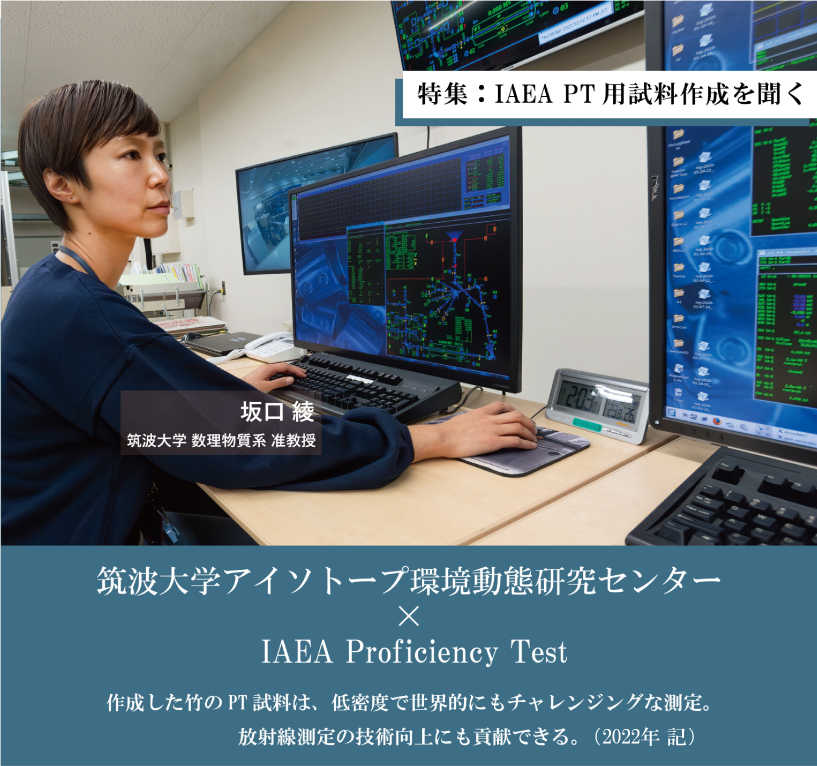
We spoke with Associate Professor Aya Sakaguchi of the Center for Research in Isotopes and Environmental Dynamics (CRiED), University of Tsukuba, whose team provided the bamboo samples used in the IAEA Proficiency Test.
— Why did you choose bamboo as the environmental sample for the IAEA Proficiency Test? How does it differ from other environmental samples in terms of its intended use?
Prof. Sakaguchi:
Bamboo is a plant that is particularly characteristic of Asia. It has a highly fibrous structure, and to our knowledge, no bamboo sample has previously been used as either a Proficiency Test (PT) material or a Reference Material (RM).
We believe this sample will be particularly valuable for supporting radionuclide monitoring and measurement activities in the Asian region. At the same time, because bamboo is a low-density material, it provides a challenging sample for laboratories participating in PTs worldwide. As such, it is expected to contribute to improving the accuracy and technical capabilities of radiation measurements.
— Could you tell us about the process of preparing the bamboo samples?
Prof. Sakaguchi:
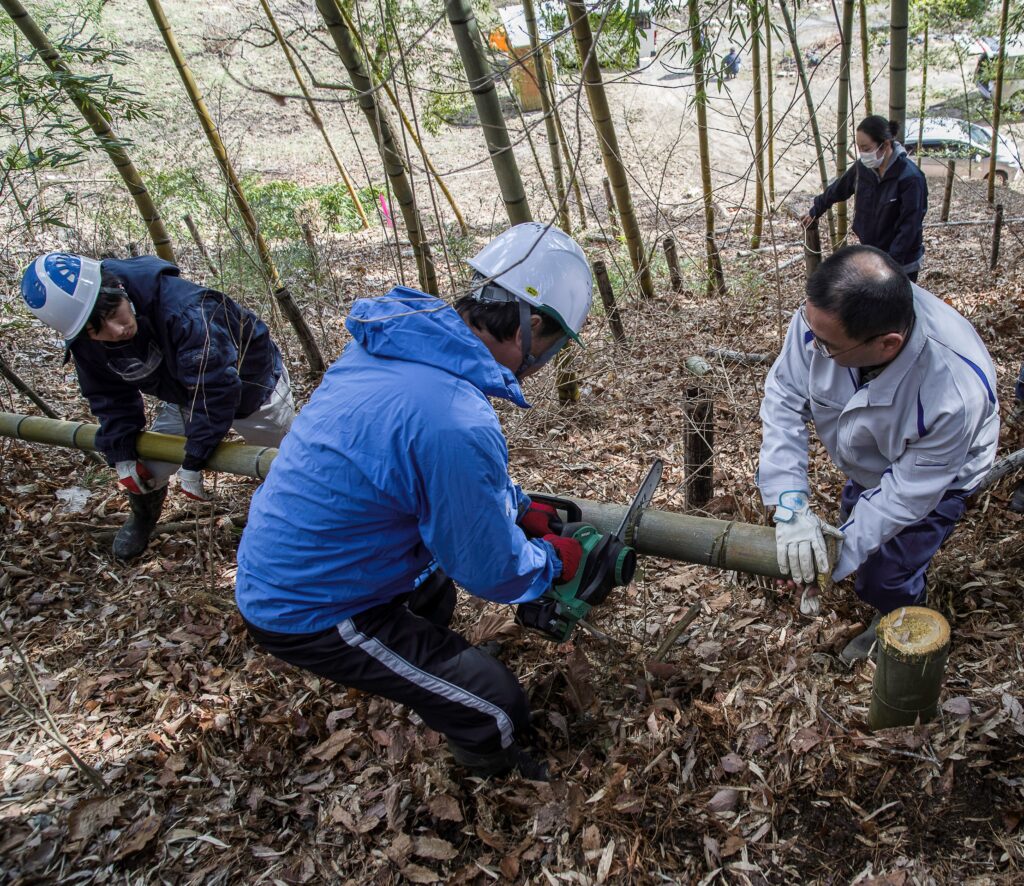
First, the IAEA specifies the target radionuclides to be included in the Proficiency Test (PT) or Reference Material (RM), as well as the required activity concentration ranges. Because the samples are ultimately distributed to laboratories around the world, several hundred kilograms of material must be prepared. We therefore carefully selected a suitable collection site that could meet these requirements.
After harvesting the bamboo, we removed all branches and leaves because only the culms—the main stems of the bamboo—were intended to be used for the PT samples.
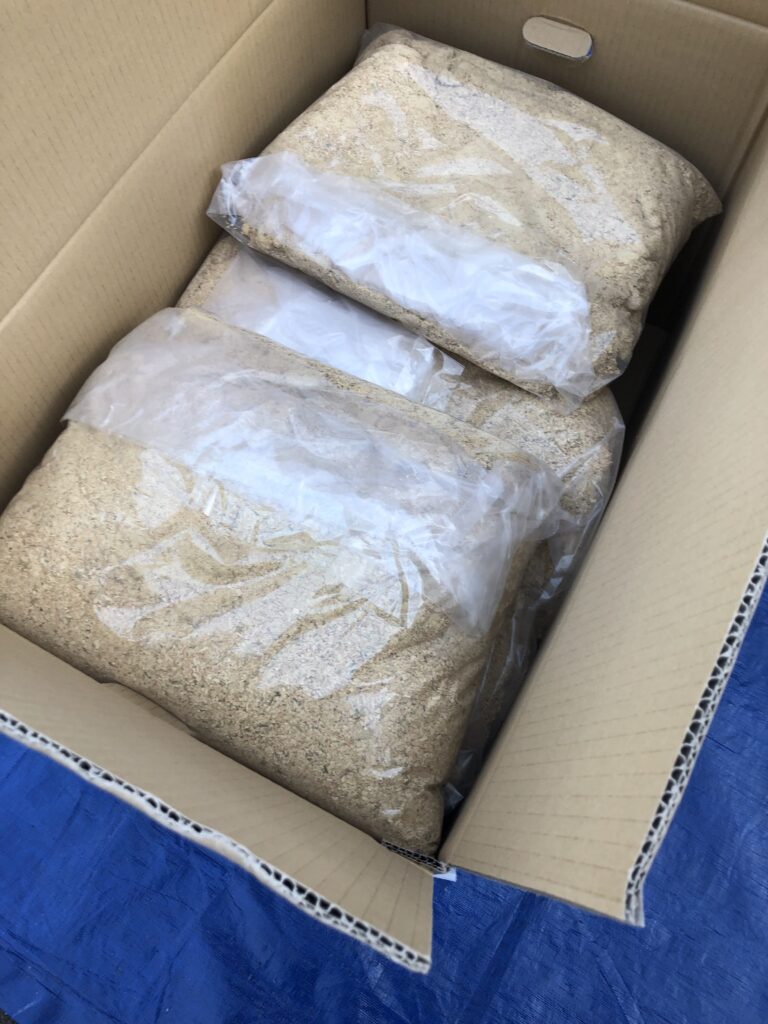
The bamboo culms were then processed into fine chips using a bamboo chipper specifically designed for bamboo. The total weight of the processed material was approximately 300 kg. After being air-dried (naturally dried indoors), the material was exported to a laboratory in Hungary.
At the Hungarian laboratory, the bamboo material was sieved, homogenized, and characterized to determine its certified values. After undergoing the IAEA certification process, it was approved as an official IAEA Proficiency Test (PT) material and distributed to laboratories around the world.
— What was the most challenging part of the preparation process?
Prof. Sakaguchi:
The first major challenge was selecting a suitable bamboo sample. We needed to obtain several hundred kilograms of bamboo containing radionuclides within the activity concentration range specified by the IAEA. To find such a site, we relied on a wide range of contacts and reached out to local governments, forestry and agricultural organizations, research institutes, and private individuals. We also visited several candidate sites in person.
Ultimately, thanks to the tremendous support of Prof. Tsukada of Fukushima University and his colleagues, we were able to obtain bamboo that met the required specifications.
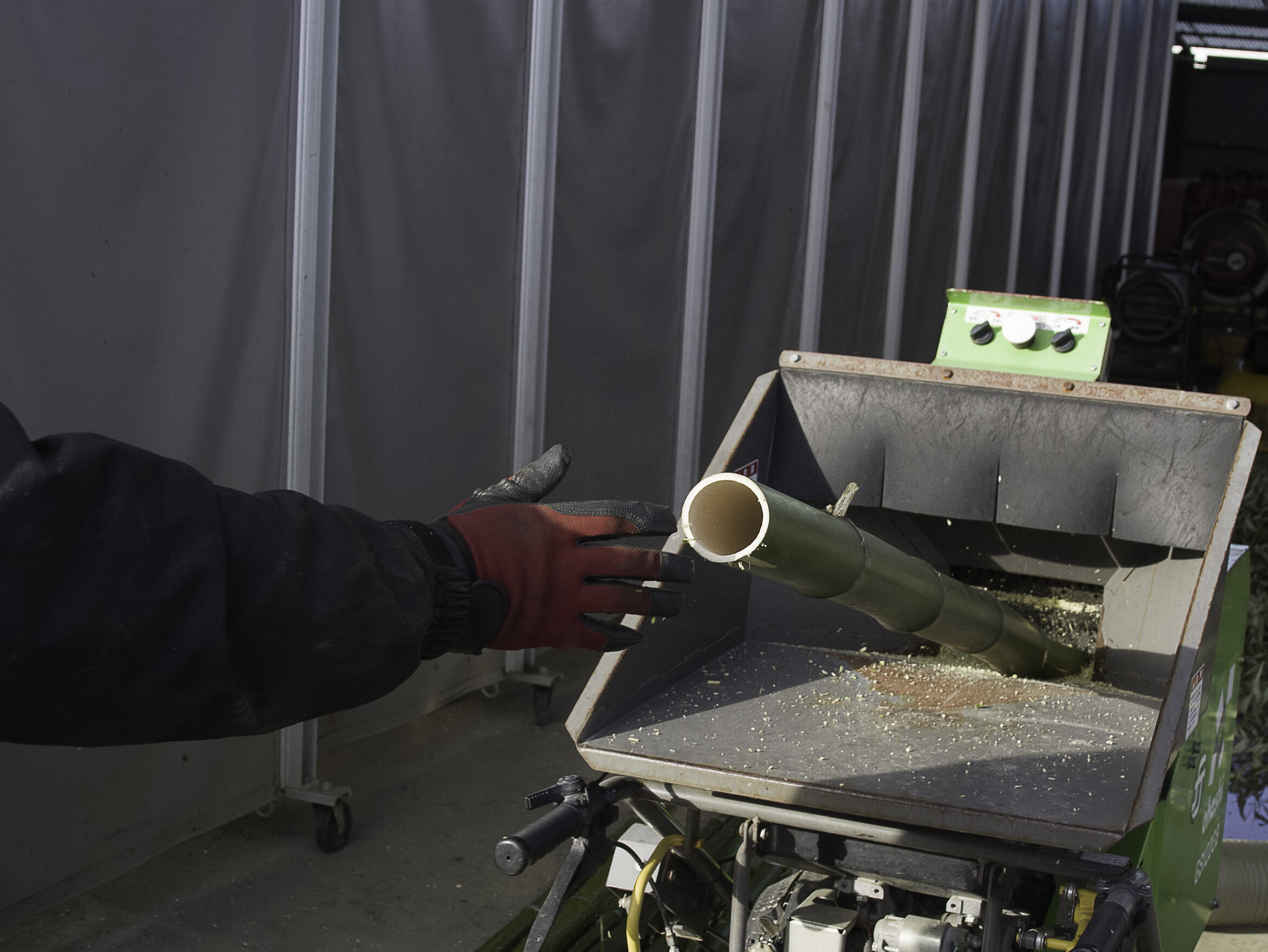
The next major challenge was processing the highly fibrous bamboo into small chips measuring approximately 2 mm × 2 mm. Initially, we prepared chips several centimeters in size, but conventional grinders designed for soil or plant samples simply crushed the bamboo rather than grinding it into finer particles. We therefore experimented with a variety of different methods.
Although we found that it would have been technically possible to achieve the desired particle size with specialized equipment, the cost would have been extremely high, especially considering that we needed to process as much as 300 kg of material. We therefore decided to rethink our approach.
In the end, we used a bamboo chipper that grinds entire bamboo culms directly into fine particles, enabling us to produce suitable PT samples efficiently.
Another major challenge was the COVID-19 pandemic. Under normal circumstances, IAEA experts would have visited to assist with sample preparation, but travel restrictions made this impossible. As a result, we had to carry out the entire preparation process on our own, which was particularly demanding.
— Which radionuclides were measured in the bamboo samples?
Prof. Sakaguchi:
The samples were analyzed for cesium-134 (¹³⁴Cs), cesium-137 (¹³⁷Cs), and potassium-40 (⁴⁰K). Now that the 2021 IAEA Proficiency Test has been completed, we are able to disclose this information.
— How will these samples be used in research and analytical activities?
Prof. Sakaguchi:
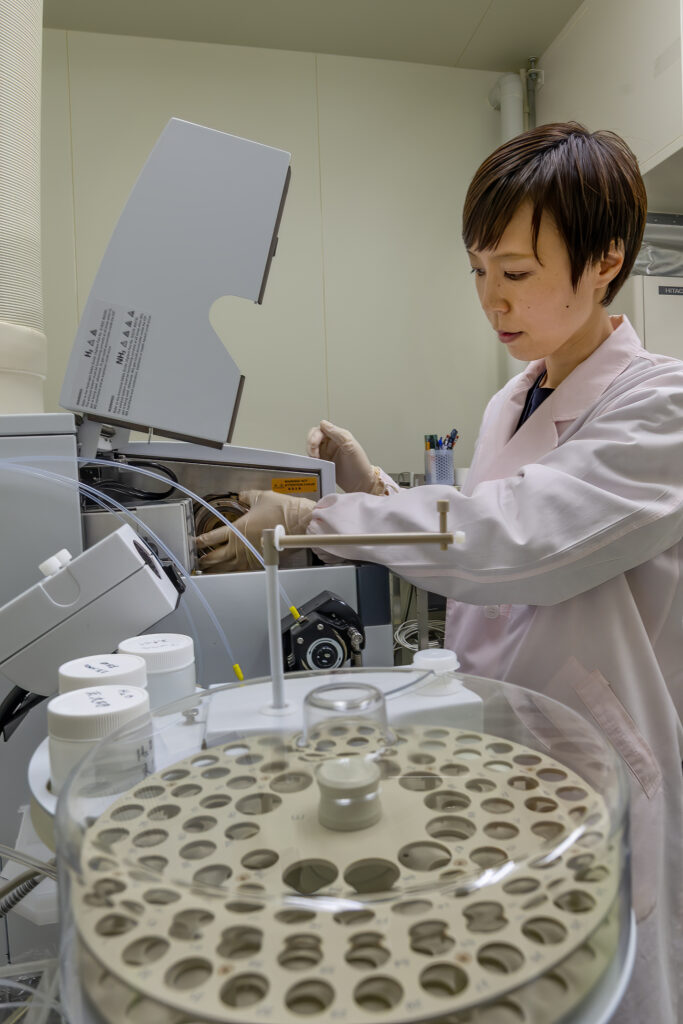
The procedures for gamma-ray spectrometry using high-purity germanium (HPGe) detectors vary among countries, regions, and laboratories. However, if the measurements are not sufficiently accurate and precise—for example, if the reported values are inaccurate or accompanied by large uncertainties—the resulting data lose their scientific value.
To verify the accuracy and precision of analytical methods, Proficiency Tests (PTs) are conducted simultaneously by major laboratories around the world, and the results are evaluated and compared. In addition, the materials are used as Reference Materials (RMs) during routine analyses to validate analytical procedures and ensure the quality of measurement results.
Although the 2021 IAEA Proficiency Test has now been completed, these bamboo samples will continue to be used as Reference Materials, helping laboratories demonstrate the reliability and traceability of their measurements.
Related Links
- International Atomic Energy Agency (IAEA) organizes Proficiency Tests (PTs)